
Leveling feet
Refine by category All categories within Leveling feet
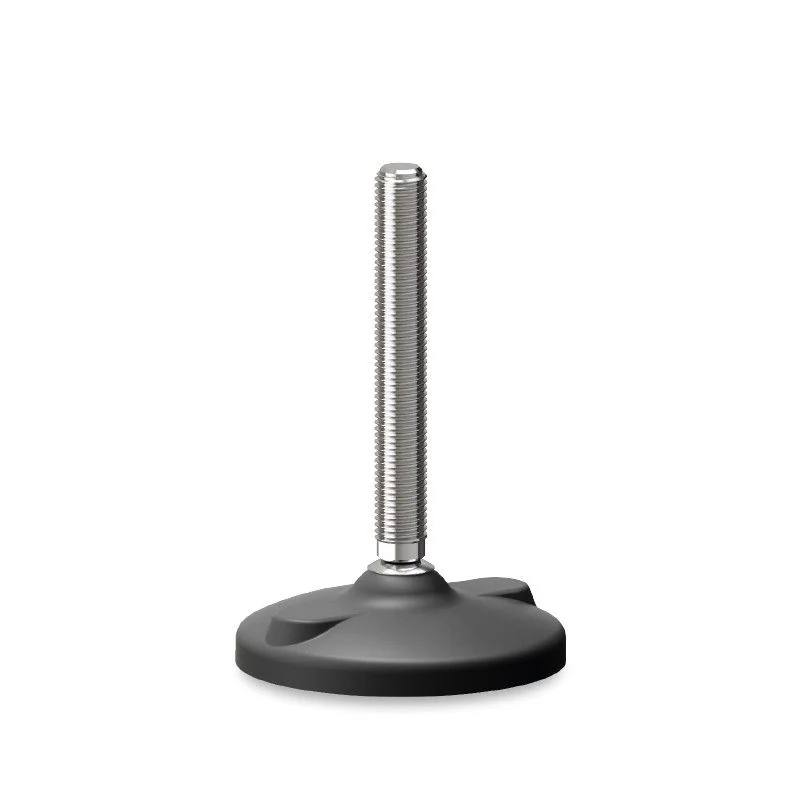
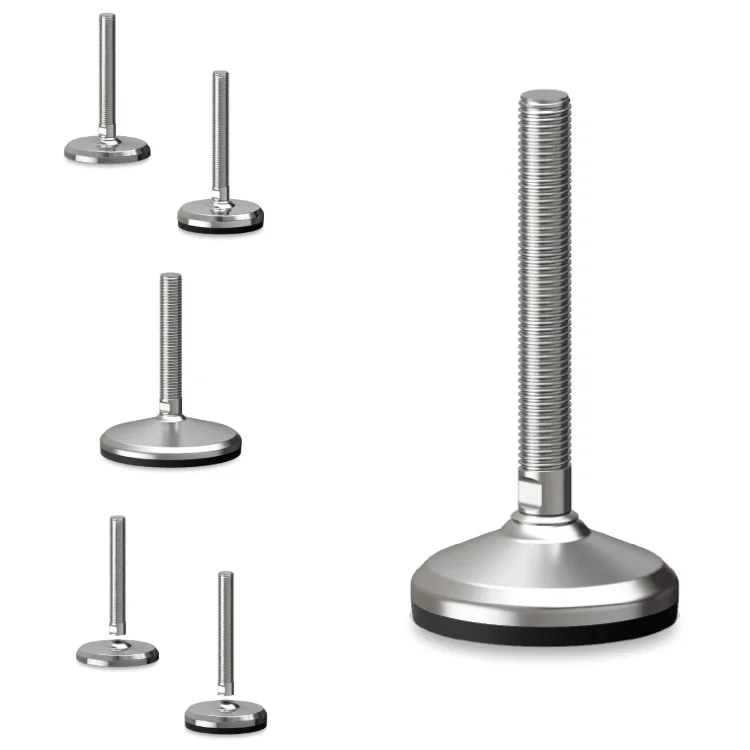
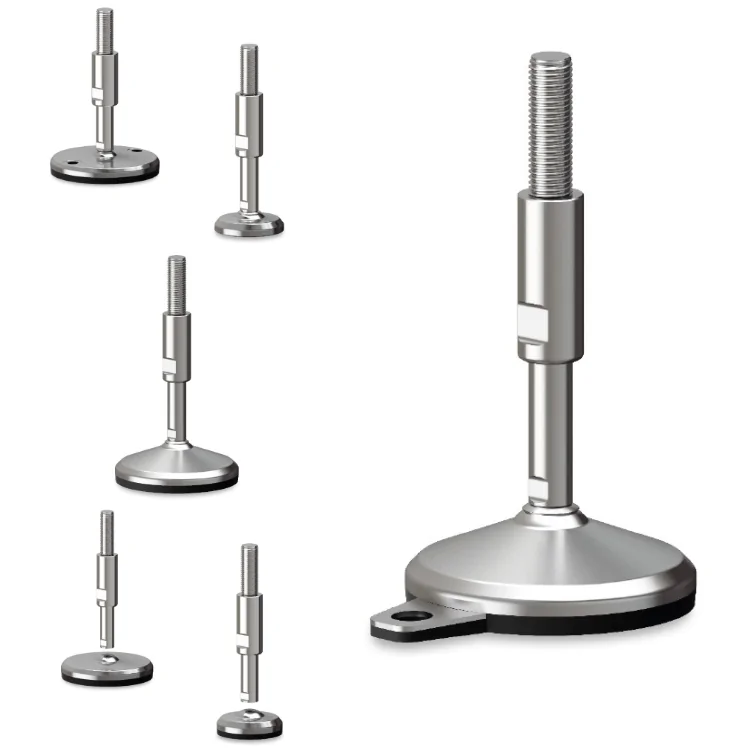
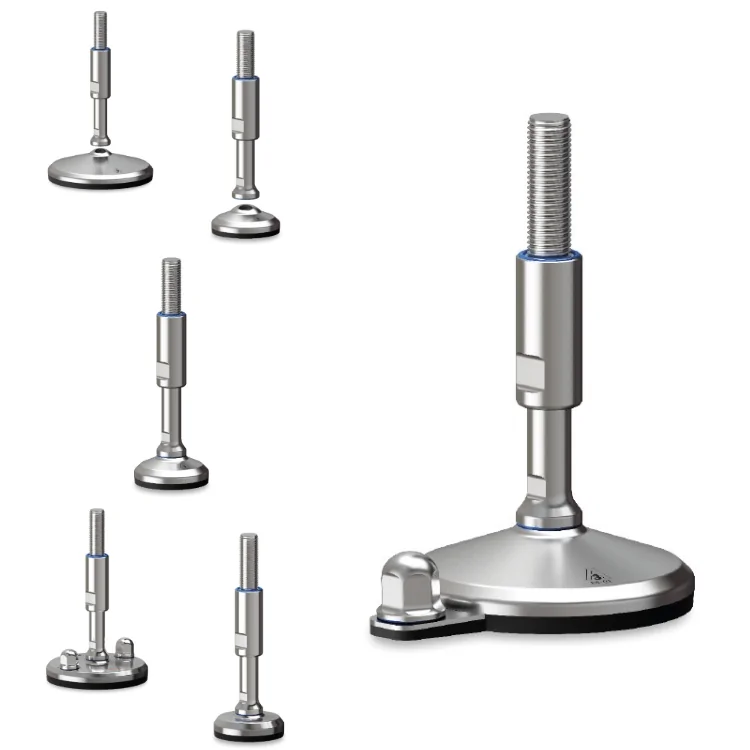
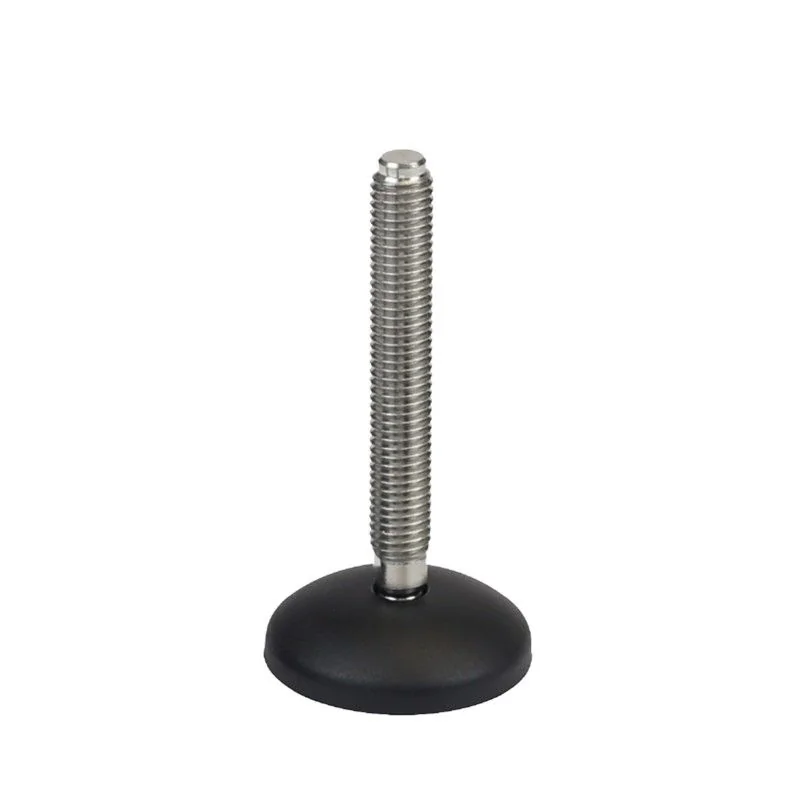
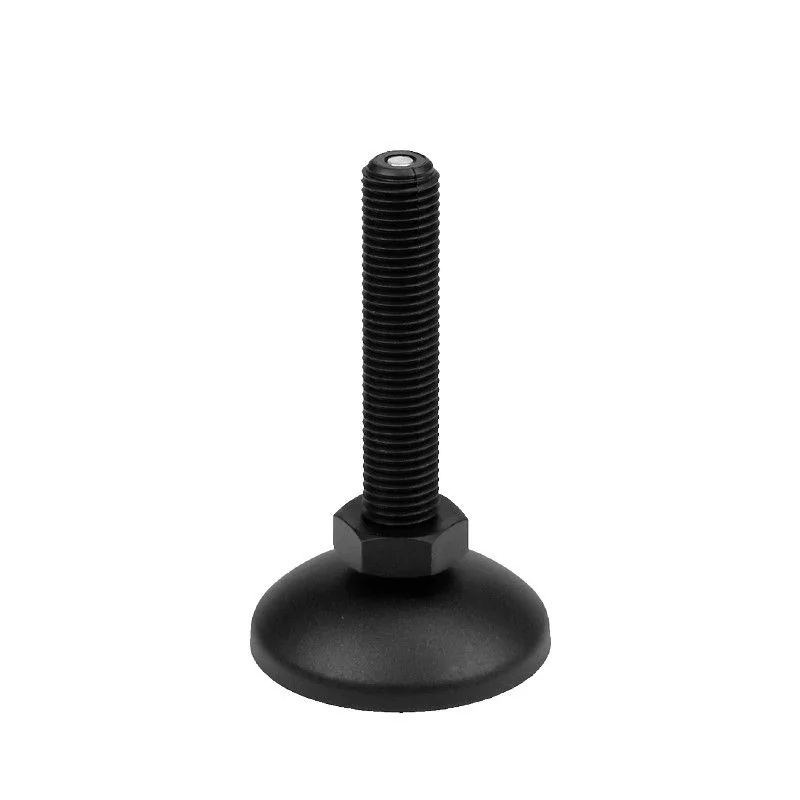
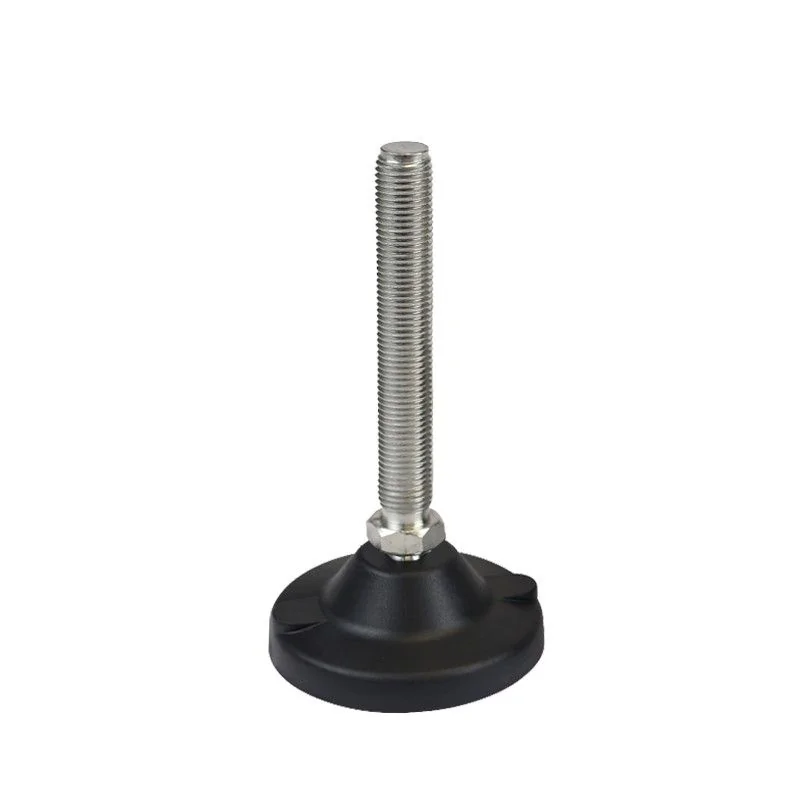
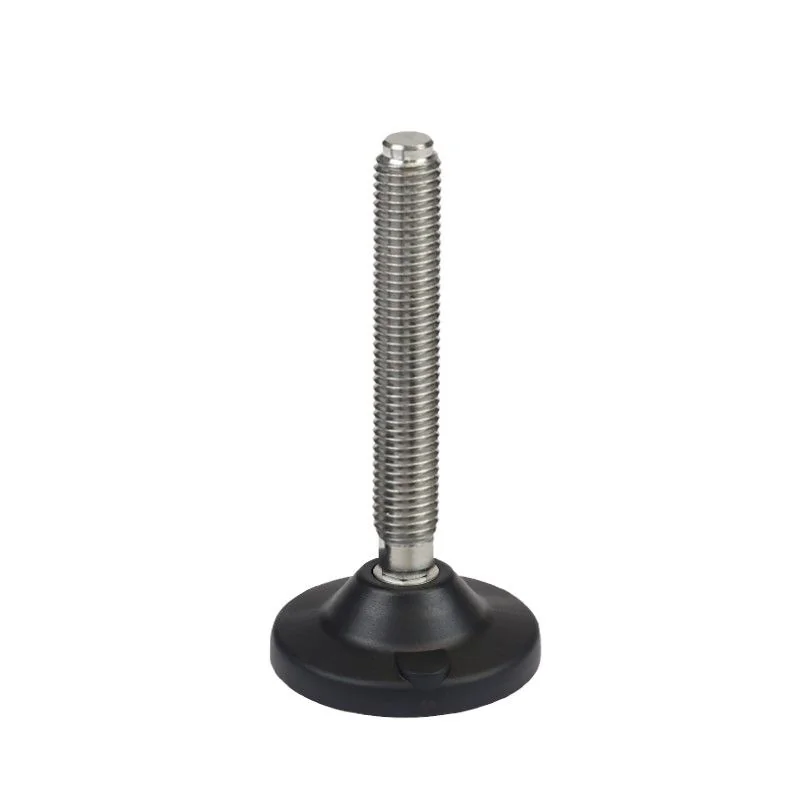
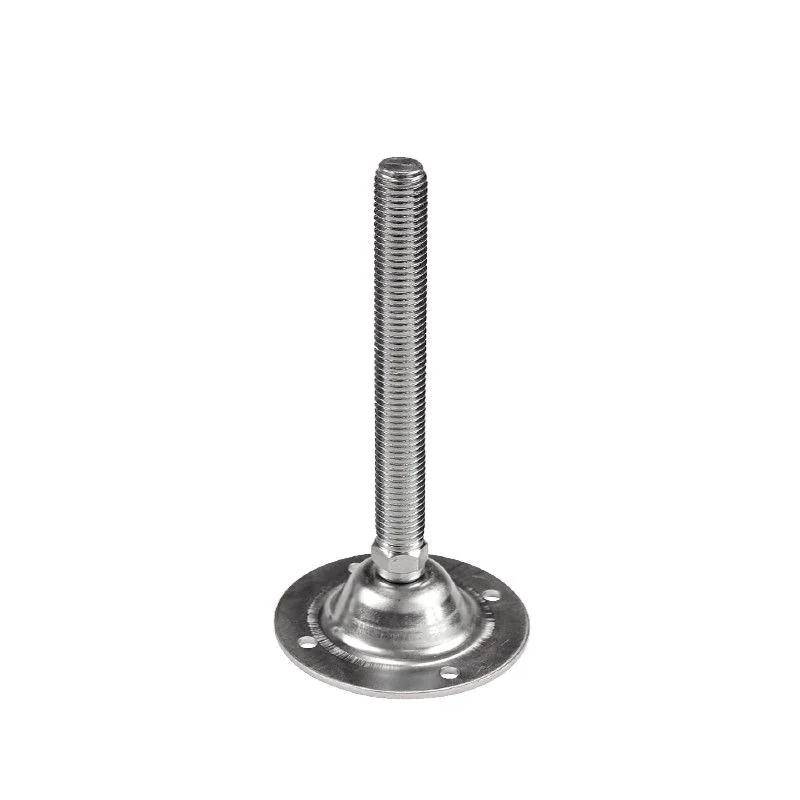
Which levelling foot to choose?
The environment determines the series; the load and the thread determine the version. In an ordinary production hall choose a plastic foot; if the foot must be easy to keep clean, choose stainless steel.
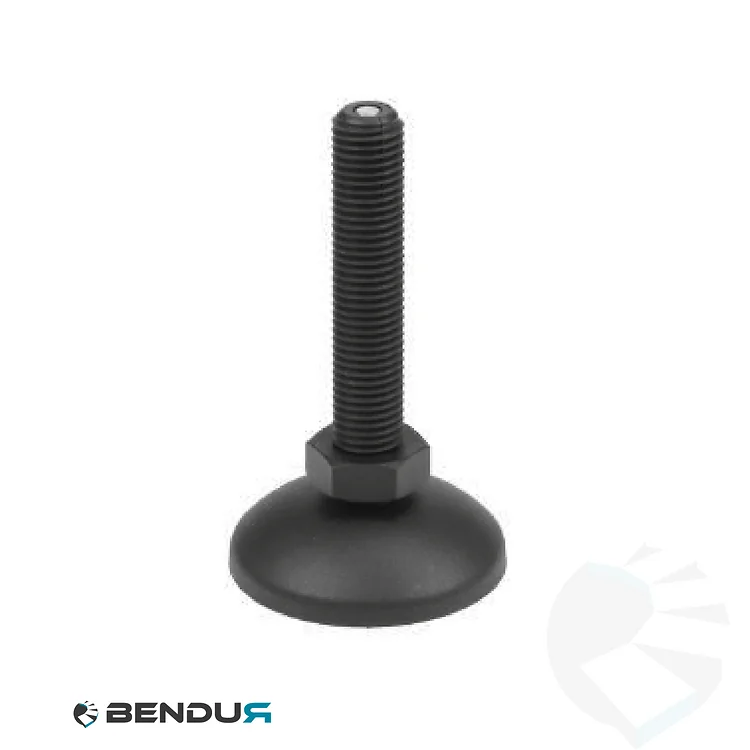
Plastic and steel foot
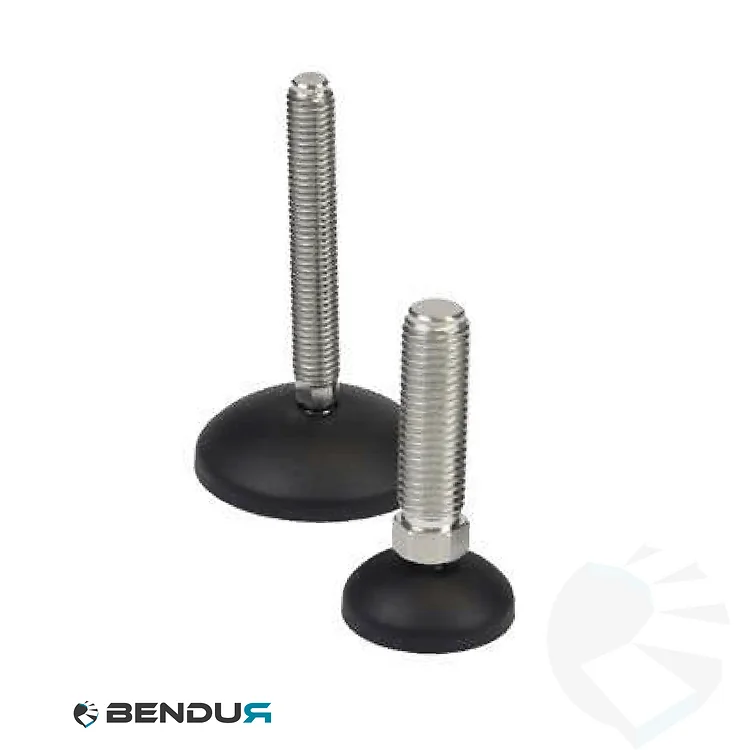
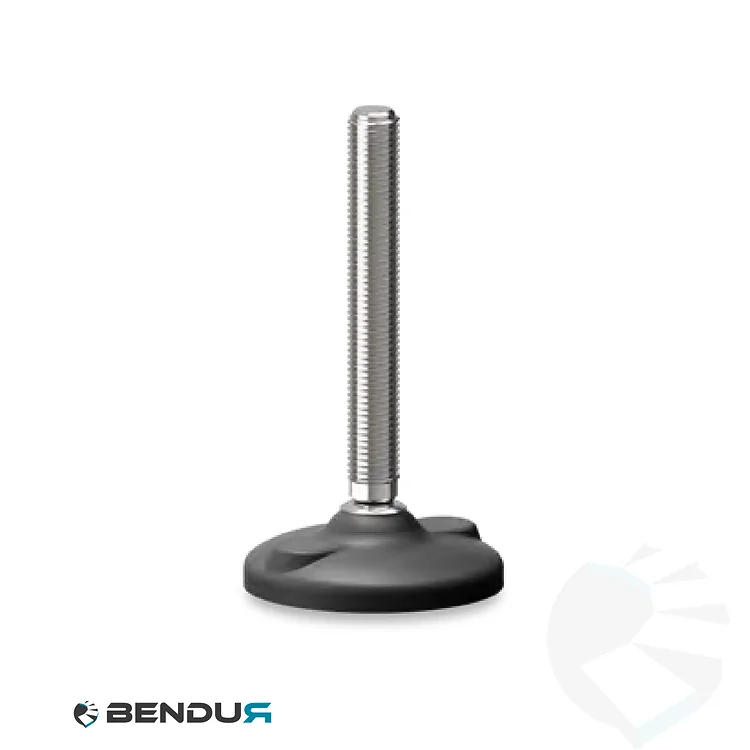
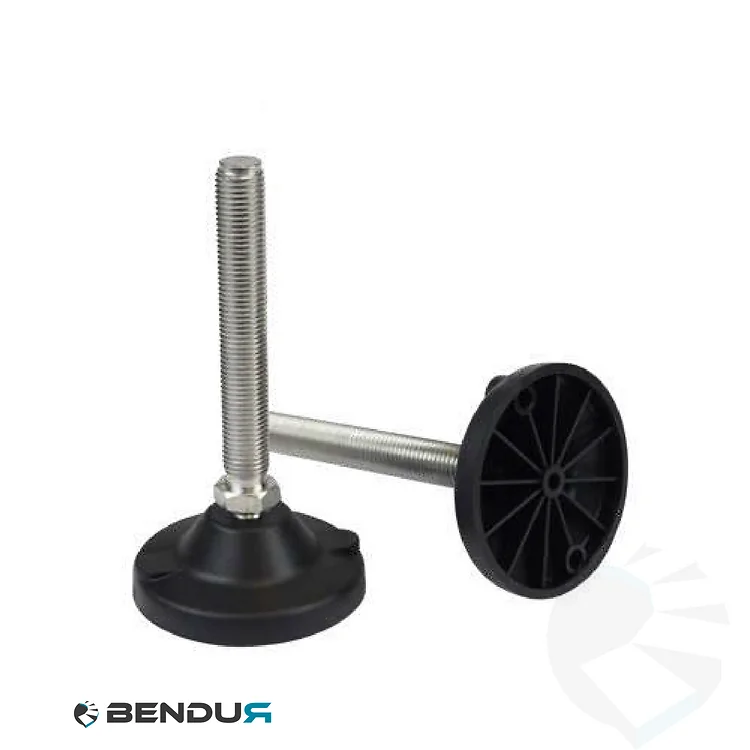
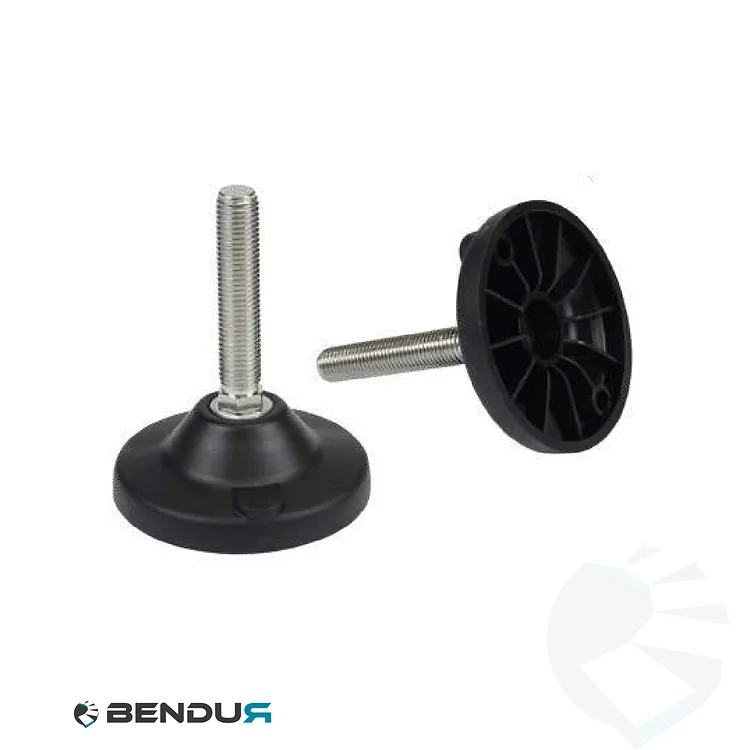
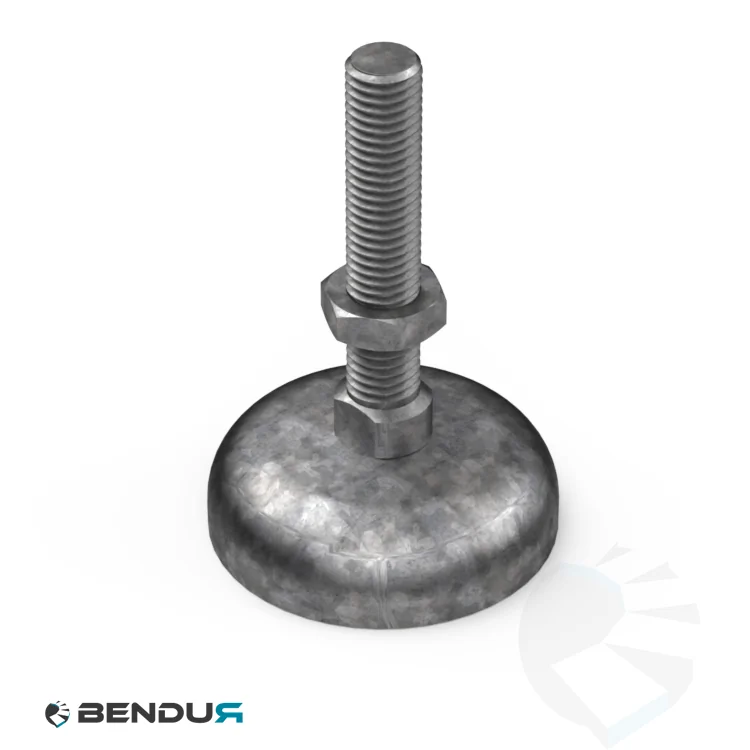
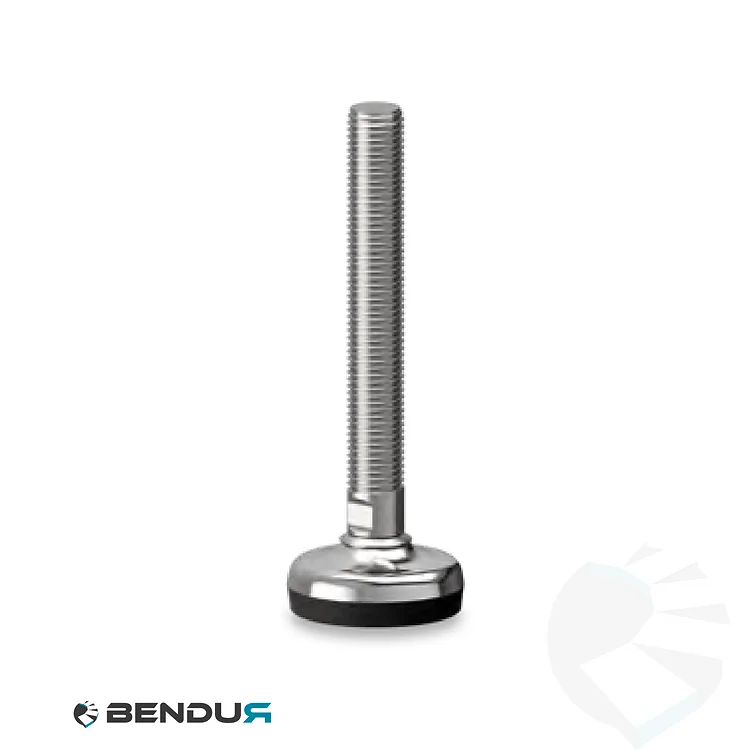
Stainless steel foot, for a hygienic environment
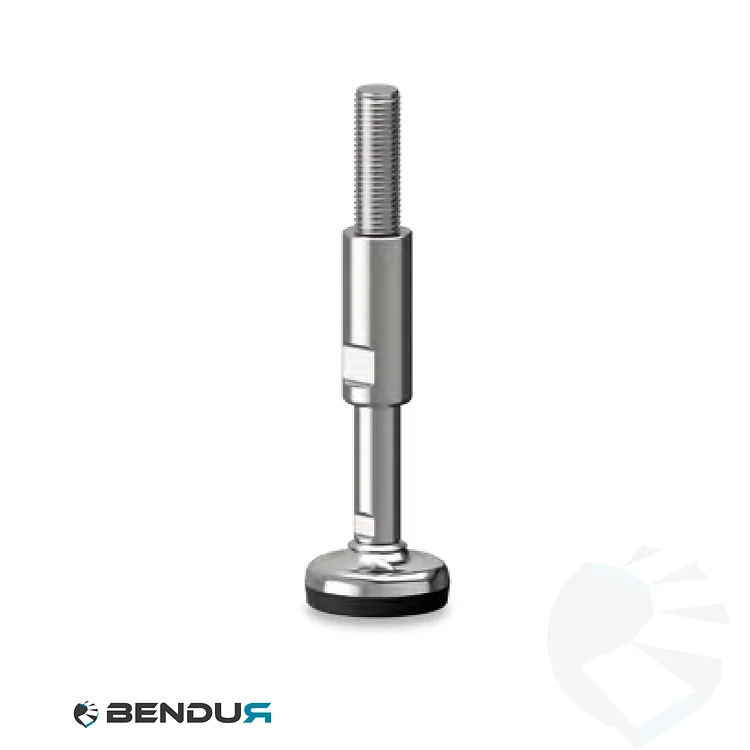
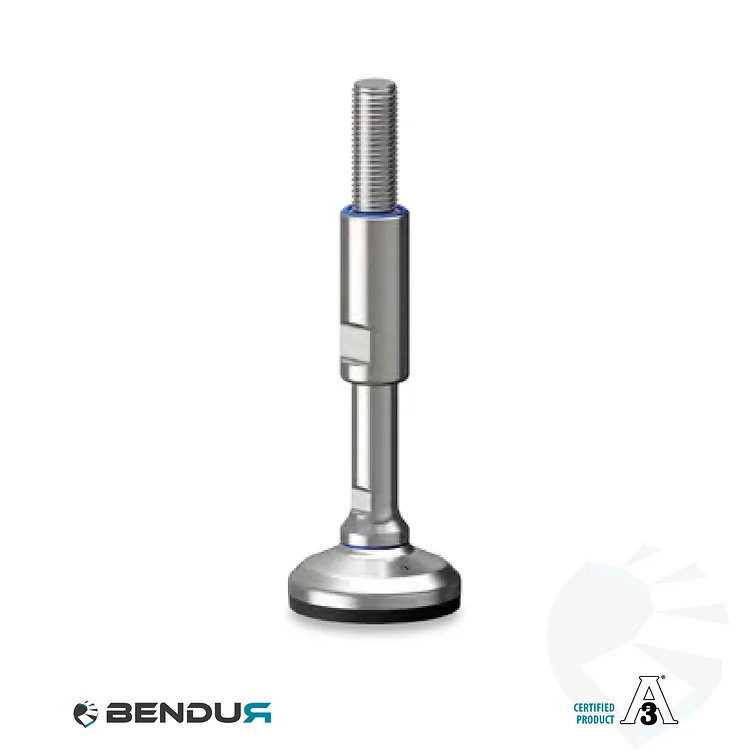
Levelling feet compared: foot, thread and load capacity
The load capacity per foot is in the product description and depends on the foot diameter and the thread.
| Series | Foot | Thread | Max. load capacity |
|---|---|---|---|
| Basic | Plastic foot, Ø30 to 100 mm | M8–M20 | 10,000 to 18,000 N |
| Basic PA | Plastic foot, Ø60, 80 or 100 mm | M16 | 12.000 N |
| P400R | Plastic foot with floor fixing, Ø80, 100 or 120 mm, with or without anti-slip rubber | M12–M24 | 12,000 to 18,000 N |
| Articulated | Cast plastic foot with floor fixing, Ø110 or 123 mm, with or without anti-slip rubber | M16–M24 | 12,000 to 25,000 N |
| Muscle | Cast plastic foot Ø123 with floor fixing, with or without anti-slip rubber | M20–M30 | 30.000 N |
| Steel | Stamped foot Ø123.5, without or with floor fixing; or a domed foot of galvanised steel, Ø45, 60 or 90 | M12–M30 | 10.000 N |
| S400 | Stainless steel, fully threaded spindle | M10–M36 | 3,000 to 150,000 N |
| S400B | Stainless steel, sealed spindle | M12–M36 | 3,000 to 150,000 N |
| C500 | Stainless steel, sealed spindle with hermetic seals; hygienically certified | M12–M36 | 4,500 to 150,000 N |
According to the product description, per foot. 10,000 N is about 1,000 kg. The stainless steel series include the standard, SPLIT, HEAVY and HEAVY-SPLIT versions.
Choosing a levelling foot in four questions
- How clean must it stay? In an ordinary industrial environment choose a plastic foot. If hygiene matters, choose stainless steel: S400, S400B with sealed spindle or the C500.
- How much load per foot? Add up the weight of the machine and the load and divide by the number of feet. Choose a load capacity well above that: a machine seldom rests equally on all feet.
- Which thread? The spindle must fit your machine, the tapped core bore of your profile (BSB slot 10: M12) or a transport and foot plate.
- Must it stay fixed? Choose anti-slip rubber against sliding, or floor fixing if the machine must be fastened to the floor.
Want to know more?
Separate parts: threaded rods, base plates and anti-slip plates. If the frame must roll, see the castors.
Frequently asked questions about levelling feet
Your question not here? Email us and we will help you think it through.
How many kg can a levelling foot carry?
According to the product descriptions the maximum load capacity per foot runs from 3,000 N to 150,000 N (a HEAVY foot Ø150 with M36). 10,000 N is about 1,000 kg.
What is the difference between S400, S400B and C500?
All three are stainless steel. The S400 has a fully threaded spindle, the S400B a sealed spindle. The C500 also has hermetic seals and is hygienically certified.
Which levelling foot do I choose for the food industry?
According to the product description the S400B, or the C500 for a critical hygiene level, such as in dairy.
What do "+ ar" and "+ fg" mean?
"+ ar" means with anti-slip rubber, "+ fg" with floor fixing.
Can I screw a levelling foot directly into an aluminium profile?
Yes, into a tapped core bore with the same thread. A BSB profile with slot 10 has tap size M12. With a different tap size you use a transport and foot plate on the profile end.
Which levelling foot do I use on an uneven floor?
The domed foot from the Steel series, or a swivelling separate base plate with ball joint.
Not sure which levelling foot fits?
Email us the weight of your machine, the number of feet and the thread. We will find the right levelling foot for you.